
What Is the Mara River Crossing in the Great Migration?
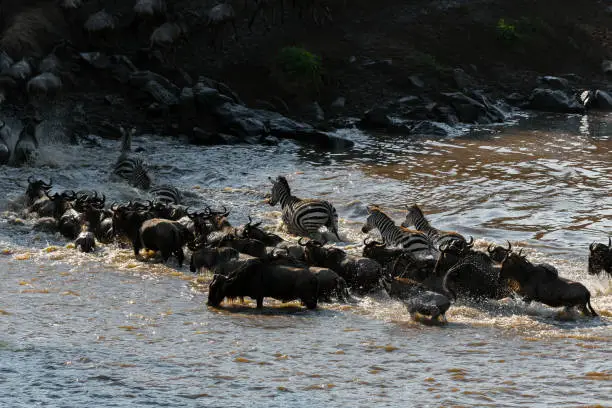
The Mara River crossings are one of the most exhilarating wildlife spectacles to encounter on African safaris. Every year between July and September, over 1.5 million wildebeest and 300,000 zebras funnel toward the single crocodile-infested Mara River on the Kenya-Tanzania border — and what happens next is pure, unscripted nature at its most brutal and beautiful. The animals plunge from six-foot banks into churning water, while thousand-pound crocodiles surge from the shallows and lions hold the far bank. Most make it across. Many don’t.
No quality of film prepares you for this moment, and no photograph has ever done it justice. And in 2026, with an early dry season pushing the herds north ahead of schedule, the conditions are shaping up for one of the most dramatic crossing seasons in recent memory. Here is your complete guide to seeing it.
When Is the Best Time to See the Mara River Crossings in 2026?
The Mara River Crossing season runs from late July through early October, with August and September offering the highest probability of witnessing a crossing. Based on the 2025/2026 La Niña weather cycle, which has caused drier-than-average conditions across northern Tanzania, the herds may arrive about 2 – 3 weeks earlier than average – potentially pushing the first major crossings to late June or early July.
Mara River Crossing Season: A Month-by-Month Breakdown
- Late June (The Quiet Before the Storm)
Many herds haven’t arrived yet, but the Mara is already stirring. Scout males and small breakaway groups begin filtering across the Tanzania border, drawn north by instinct older than memory. Crowds are thin, guides are relaxed, and game viewing is quietly excellent. If you want the Mara without the circus, this is your window.
- July (The plains start filling)
By mid-July, the first major herds are pressing against the Mara River, typically at Sand River and the southeastern crossing points – and the tension that precedes every crossing begins to build. Vehicle numbers are manageable during this month, and the energy is generally electric. July is often underrated, and many regulars know this.
- August (Peak Season)
This is the month most people picture when they imagine the Great Migration, especially the Mara River Crossings. Crossings are frequent, herds are enormous, and on a good morning, you can watch tens of thousands of animals plunge into the river before breakfast. However, the crowds are big: the most popular crossing points can see up to 200 vehicles on a busy day. Book your sighting in advance, position yourself well, and accept the crowd.
- September
Ask any seasoned traveller which month they personally prefer, and most will say September without hesitation. The dry conditions that thinned Serengeti’s grass earlier in the year give way to shifting rainfall patterns, and herds begin moving back south – creating two-way crossing cycles that are arguably more dramatic than anything August offers.
Vehicle numbers drop by 25 – 30%. Crocodiles are fully active, fat, and hunting hard. Some of the most violent and extraordinary crossings on record have happened after 4:30 PM in September light. This is the month serious wildlife photographers quietly book years in advance.
- October
The short rains begin pulling the herds back toward Tanzania. Crossings still happen, but thin out as October progresses. Mara doesn’t suddenly go quiet, though; predator activity remains high, and the plains stay full, but if river crossings are your primary goal, the season is winding down. Come in early October for a last roll of the dice; after mid-month, redirect your expectations toward the big cats (lions, cheetahs, and leopards).
Pro Tip: No crossing is ever guaranteed. Herds can sit at the riverbank for hours or days before a single brave animal tries to plunge through. Plan to spend multiple days at the river. Five nights is the minimum; seven nights is ideal.
Where to See the Mara River Crossings in Maasai Mara
Kenya vs. Tanzania
The Mara River forms the border between Tanzania’s Serengeti National Park and Kenya’s Masai Mara National Reserve: the same herds, the predator-prey encounters (Nile crocodiles, leopards, hyenas, and lions), the same crossings, but the experience on either side of that border is surprisingly different.
- Masai Mara National Reserve (Kenya)
Masai Mara is where most people come, and for good reason. The infrastructure is excellent, lodge options span every budget, and the open savannah scenery is exactly what you’ve seen in every wildlife documentary you’ve ever watched.
The reserve’s western section, known as the Mara Triangle, is the crown jewel of the Mara River crossings – strictly managed, with lower vehicle counts, and consistently the most rewarding crossing experience on the Kenya side. The rates often reflect all of this, with non-resident park fees hitting $200 per person per day, as per 1st July. This alone makes it one of the most expensive wildlife reserves on the continent. Most people decide it’s worth it.
- Northern Serengeti National Park (in Kogatende) – Tanzania
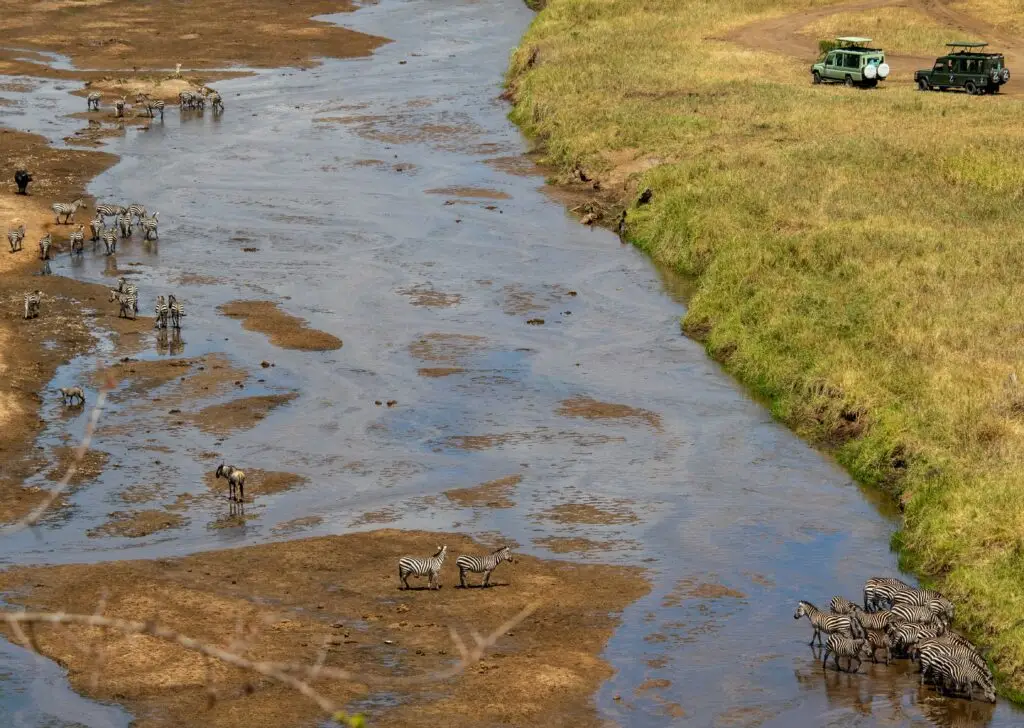
Cross into Tanzania, in the northern Serengeti (Kogatende area), and the atmosphere changes immediately. Fewer vehicles, fewer lodges, fewer people, and still the same herds crossing the same river. This area feels genuinely wild in a way that’s harder to find on the Kenya side during peak season.
However, getting here takes more planning: a separate Tanzania visa, a longer flight routing, or a vehicle border crossing, and fewer accommodation options. But for travelers who’ve done the Mara before and want to go deeper, this is the answer. The experience isn’t better, but it’s quieter, rawer, and in its own way, more affecting.
- The Best of Both: The Kogatende–Mara Triangle Loop
Spend three or four nights on the Tanzania side for uncrowded crossings and a true wilderness atmosphere, then cross into Kenya’s Mara Triangle for the full savannah experience and easier access to more crossing points. Most specialist East Africa operators offer this as a single itinerary, and most of our clients who’ve done it consistently call it the definitive migration safari. If your budget allows, you can only do this once, and this is how you do it right.
Mara River Crossing Season: The 5 Main Crossing Points in the Masai Mara
- Serena Crossing (August – September)
Located near Mara Serena Lodge in the Mara Triangle, this is the most consistently active crossing point. Features steep banks make animal exits dramatic and visually intense.
- Lookout Hill
An elevated ground offering panoramic views of the Mara River below. Wildebeest can be seen gathering in huge numbers before leaping. It is ideal for wide-angle photography, showing the full scale of a crossing.
- The Sand River
The Sand River is a Mara River tributary with no crocodiles, making crossings faster and less predatory but still spectacular in scale. The tributary is often active by July as herds enter from Tanzania.
Kichwa Tembo Area
Located in the Mara Triangle, where the river flows at strong tides. The powerful current sometimes causes animals to miss exit points after being overwhelmed by the water levels — this is where some of the most intense moments happen.
- Paradise Plains / Governors’ Camp Area
Situated near the Musiara marsh, this point is a famous filming location for wildlife documentaries, featuring an open landscape with excellent sightlines and reliable large-herd concentrations.
Pro Tip: Crossing points are also numbered 1–14 from the Serengeti side. The first crossings of the season typically occur at Points 10, 9, 8, and Makutano in July.
Private Conservancies vs. the Main Reserve
- The Main Reserve
Most Mara River Crossings occur in Masai Mara National Reserve. Park rules include no off-road driving in river zones, a 10-minute viewing limit when more than 5 vehicles are present, and no night drives. The Mara Triangle in the western section enforces these rules far more strictly than the eastern Sekenani/Talek side.
- Private Conservancies
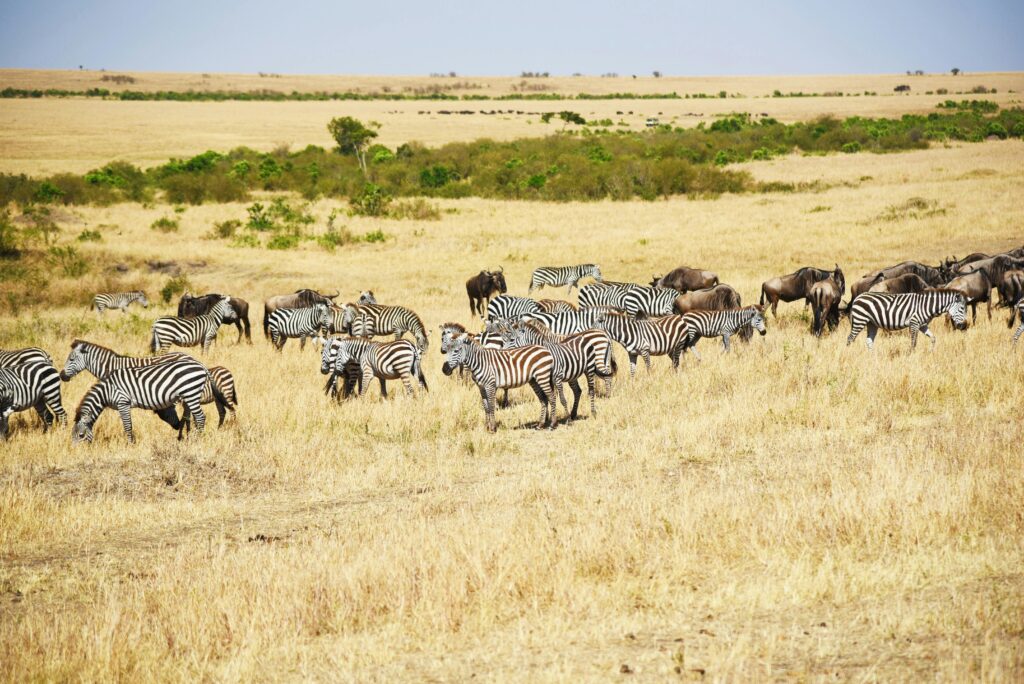
Private conservancies such as Naboisho Conservancy, Olare Motorogi Conservancy, Mara North Conservancy, and Ol Kinyei Conservancy border the Mara on Maasai community land. These conservancies offer a more exclusive safari experience, with strict vehicle limits of 3 – 5 vehicles per sighting, compared to the higher densities inside the reserve.
Guests also enjoy night game drives, walking safaris, and off-road game viewing, creating more intimate and flexible wildlife encounters. Conservation fees run between $80 – $150 per person, per day, usually included in lodge rates.
Pro Tip: Sleep in a private conservancy for exclusivity and personalized guiding. Then join the main reserve for game drives, specifically when chasing river crossings.
Mara River Crossing Season: 2026 Park Fees and Safari Costs
Official Masai Mara Entry Fees 2026
Visitor | Jan – Jun | Jul – Dec |
Non-resident adult | $100/day | $200/day |
Non-resident child (9–17) | $50/day | $50/day |
Child under 8 | Free | Free |
East African resident | $70/day | $70/day |
Pro Tip: Tickets are valid for 12 hours (6 AM–6 PM). Overnight guests inside the reserve who depart after 11 AM pay an additional full-day fee. The Mara Triangle further accepts cashless payment only — Visa, Mastercard, or M-Pesa.
Mara River Crossing Season: Tips to Maximize Your Crossing Experience
- Be patient, not reactive
River crossings punish impatience. Chasing radio chatter across the reserve usually means arriving just as the action ends. Choose a crossing point, commit to it, read the herd, and wait. The Mara rewards stillness, not speed. - Learn to read the animals
Crossings are announced long before they happen, if you know the language. Herds bunch tightly at the bank, wildebeest testing the water repeatedly, zebras vocalising more sharply, and then everything goes eerily quiet. With an experienced guide, these signals are unmistakable. - Respect vehicle etiquette
Crowded riverbanks kill momentum. When vehicles line the edge and block access routes, the herds retreat, sometimes for hours. Rangers in the Mara Triangle enforce 100-metre buffers for a reason. - Visit in September
August delivers volume, but September delivers theatre: back-crossings, fully active crocodiles, golden afternoon light, and 25–30% fewer vehicles. If August is full, September isn’t second best – it’s smarter. - Stay close to the river
During migration season, proximity matters more than star ratings. Staying 10 minutes from a crossing point beats staying 30–60 minutes further – it offers a chance to witness multiple crossings in a week instead of just one.
Mara River Crossing Season: Best Way to Get There
- From Nairobi
Fly into Wilson Airport in Nairobi and connect to a Mara airstrip (30 – 45 min). Alternatively, drive from Nairobi via Narok for approximately 5 to 6 hours.
- From Tanzania
Fly into Kilimanjaro or Julius Nyerere International Airport, then connect to Kogatende Airstrip for the Northern Serengeti.
Photography Tips for the Mara River Crossing Season
The Mara River crossings offer one of the most challenging yet rewarding wildlife photography moments in the world. What usually separates good shots from great ones:
Photography Gear
- Telephoto lens (200–400mm) for close crossing action, paired with a wide-angle lens to capture the scale of the migration.
- Extra batteries are essential. Cold early mornings and extended waiting periods drain power quickly.
- Dust protection: Keep lenses in ziplock bags when not in use to protect against fine dust from large moving herds.
Best Light Conditions
- Early morning (6–9 AM): Soft side-light highlights water spray, muscle detail, and movement.
- Late afternoon (4–6 PM): Ideal for backlighting, silhouettes, and dramatic dust—particularly strong in September.
- Midday: Harsh light and dust haze can still produce atmospheric silhouette images if used deliberately.
Positioning for Strong Images
- When herds cross south to north, position on the northern bank to photograph animals exiting the river.
- Lookout Hill is ideal for wide establishing shots.
- The Serena crossing and Governors’ Camp area offer the best up-close water-level action. Vehicles with lower seating positions allow more dynamic shooting angles (worth requesting when booking).
Animal Behavior & Storytelling
- The build-up to a crossing often offers the strongest photographic moments (nervous pacing, scout wildebeest testing the water, and crocodiles surfacing). These moments add context and narrative beyond a single action frame.
Frequently Asked Questions (FAQS) About the Mara River Crossing Season
Mara River Crossing Season: Frequently Asked Questions (FAQS)
Is a Mara River crossing guaranteed?
No. Crossings are entirely natural. No operator or guide can guarantee one. However, spending 3 – 5 days at the river during August or September historically gives you a very high chance.
How many crossings happen per day?
On a good day in August, multiple crossings can occur at different points along the river. On other days, herds build up and wait without crossing at all. The unpredictability is part of what makes witnessing one so memorable.
Is August too crowded?
It depends on where you are. Up to 100 vehicles can congregate at the most popular crossing points during peak August mornings. But in the Mara Triangle, private conservancies, or at less-trafficked crossing points like around the Sand River, the experience remains extraordinary. September solves the crowd problem almost entirely.
Can I combine this with other East Africa experiences?
Absolutely. August is peak dry season for both the Masai Mara and mountain gorilla trekking in Uganda’s Bwindi Impenetrable Forest or Rwanda’s Volcanoes National Park. Many 2026 travelers are pairing the migration with a gorilla permit – flying from Nairobi to Entebbe or Kigali after their Mara days. The contrast between open savannah spectacle and intimate rainforest encounters makes for one of the most diverse wildlife itineraries on Earth.
Final Thoughts: Is 2026 a Good Year for the Mara River Crossings?
The Mara River crossing season 2026 is expected to be a strong year for Great Migration sightings in the Maasai Mara, with the usual peak activity between July and October. While river crossings are never guaranteed on a specific day, seasonal weather patterns and historic migration movement suggest good herd density during the core months, especially August and September. For travelers planning a safari, 2026 remains a reliable and rewarding year to witness the Migration Mara River crossings, provided you stay at least several nights near key river points for the best chance of sightings.